
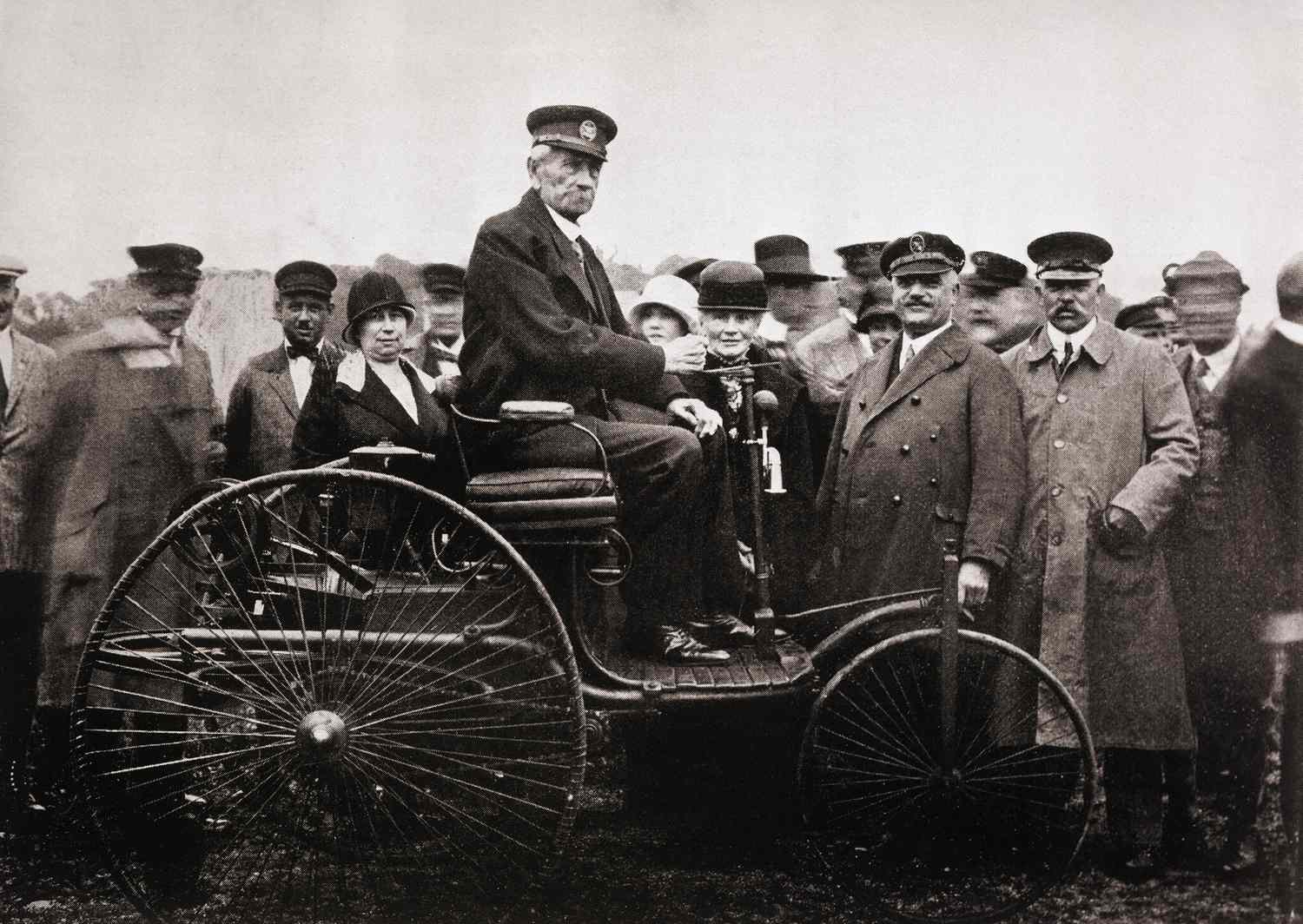
The Motorwagen

The most important invention.

The Motorwagen was patented on 29 January 1886 as DRP-37435: "automobile fueled by gas".

DEVELOPMENT

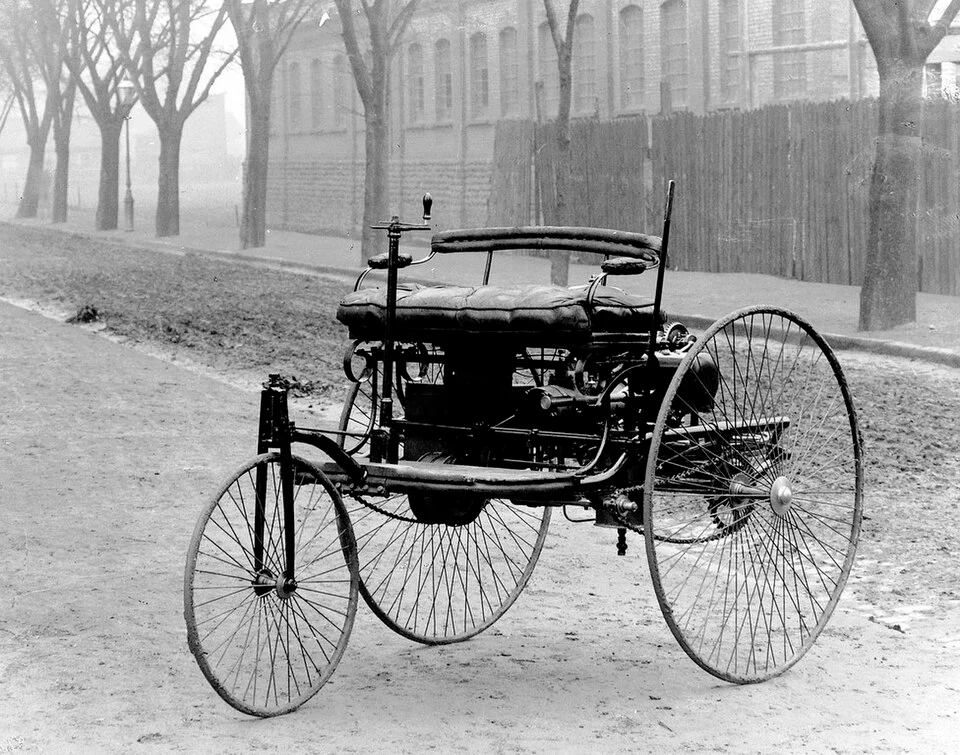
The Benz Patent-Motorwagen

Built in 1885, it was the first vehicle designed from the ground up to be powered by an internal combustion engine rather than adapted from existing carriages. Benz focused on creating a lightweight chassis, a reliable gasoline engine, and a simple three-wheel design to improve stability and control. Through continuous testing and refinement, including improvements to the engine’s efficiency and ignition system, the Motorwagen became a functional and innovative machine, laying the foundation for modern automobiles.
what happened next?

Future of the Motorwagen

Initial Sales

Benz began to sell the vehicle in the late summer of 1888, making it the first commercially available automobile in history. The second customer of the Motorwagen was a Parisian bicycle manufacturer Emile Roger, who had already been building Benz engines under license from Benz for several years. Roger added the Benz automobiles (many built in France) to the line he carried in Paris and initially most were sold there.

Further improvements

The early 1888 version of the Motorwagen had only two gears and could not climb hills unaided. This limitation was rectified after Bertha Benz drove one of the vehicles a great distance and suggested to her husband the addition of a third gear for climbing hills. In the course of this trip she also invented brake pads.

as demand grew

Benz and Cie. expansion

The success of the Benz Patent-Motorwagen led to the expansion of Benz & Cie., founded by Karl Benz. As the Motorwagen proved that automobiles could be practical, the company grew its production capabilities and refined its designs to meet increasing interest. Benz & Cie. focused on improving engine performance, reliability, and overall vehicle design, gradually transitioning from experimental models to more standardized production. This period of growth helped establish the company as one of the world’s first successful automobile manufacturers and played a key role in advancing early automotive engineering.