
Chronology
Timeline
| Date | Milestone | Event | |
|---|---|---|---|
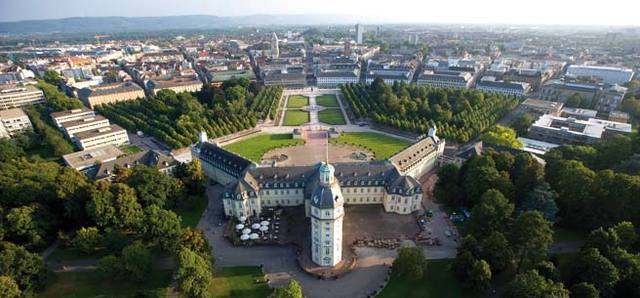 |
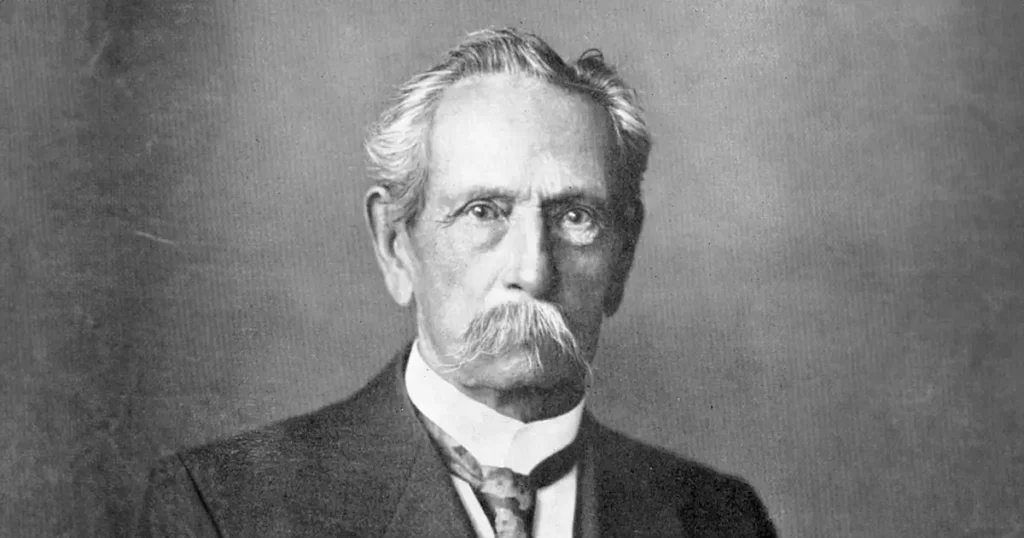
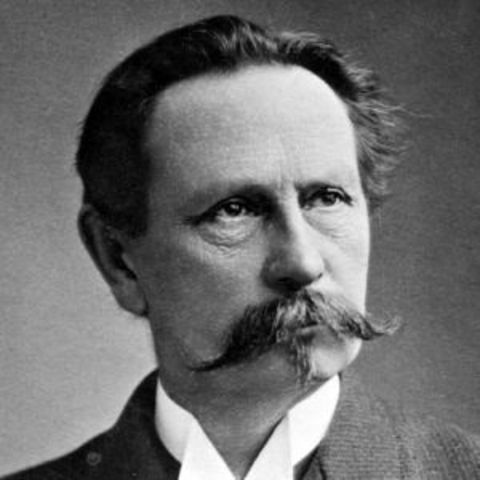
Nov 25, 1844 | Date of Birth | Karl Benz was born in 1844 in Karlsruhe, Baden, Germany. His mother was Josephine Vaillant and his father was Johann George Benz, a locomotive driver. |
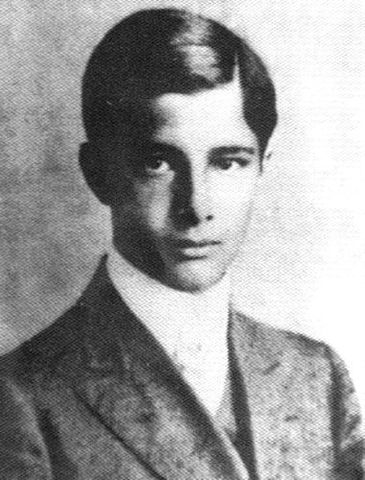 |
Jun 13, 1859 | Starts to study at The Lyceum of Science | Despite living in near poverty, his mother strove to give him a good education. Benz attended the local Grammar School in Karlsruhe and was a prodigious student. In 1853, at the age of nine he started at the scientifically oriented Lyceum. |
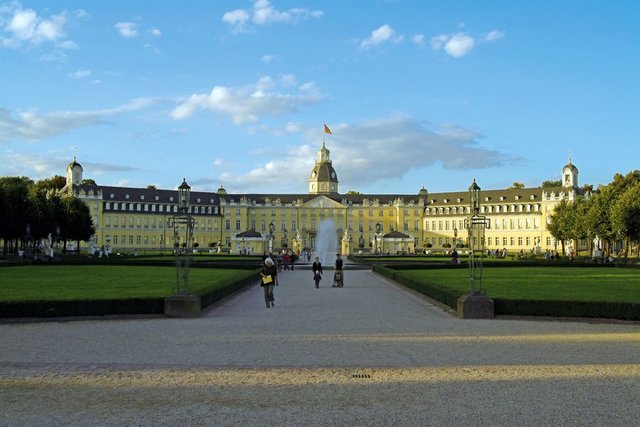 |
Sep 30, 1860 | Joins Karlsruhe University | At age fifteen, he passed the entrance exam for mechanical engineering at the University of Karlsruhe, which he subsequently attended. |
 |
Jul 9, 1864 | Graduates with an Engineering Major at Age 19 | He graduated with a degree in Mechanical Engineering. During his years at the university he had already started to envision concepts for a vehicle that would eventually become the horseless carriage. |
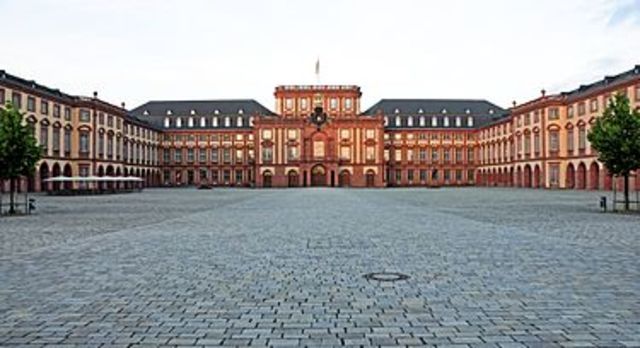 |
Jun 13, 1871 | Starts To Work In Mannheim | At the age of twenty-seven, Karl Benz joined August Ritter in launching the Iron Foundry and Mechanical Workshop in Mannheim, later renamed Factory for Machines for Sheet-metal Working. The enterprise's first year went very badly. Ritter turned out to be unreliable, and the business's tools were impounded. The difficulty was overcome when Benz's fiancee, Bertha Ringer, bought out Ritter's share in the company using her dowry (a transfer of parental property at the marriage of a daughter ). |
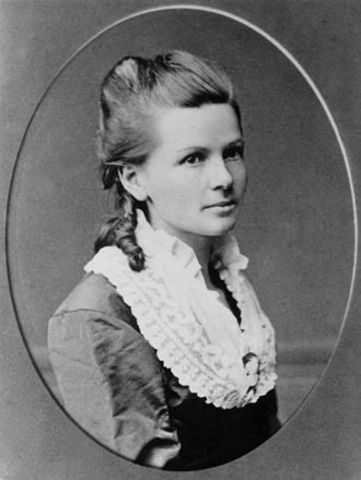 |
Jul 20, 1872 | Marriage | On this date, Karl Benz and Bertha Ringer married. They had five children: Eugen (1873), Richard (1874), Clara (1877), Thilde (1882), and Ellen (1890). |
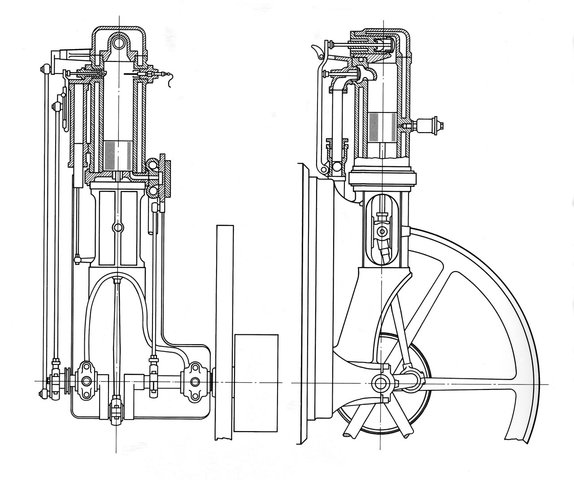 |
Jun 13, 1879 | The Combustion Engine and Patents that Would Change The World | The patents soon led to substantial revenue increases and helped to subsidize the workshop business. Carl Benz' true genius became obvious thanks to his successive inventions, registered whilst designing what would become the production standard for his two-stroke engine (Combustion Based). During this time he patented : the speed regulation system, the ignition using sparks with a battery, the spark plug, the carburetor, the clutch, the gear shift and the water radiator. |
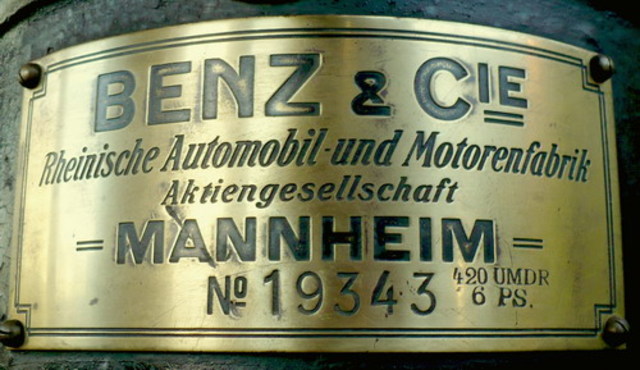 |
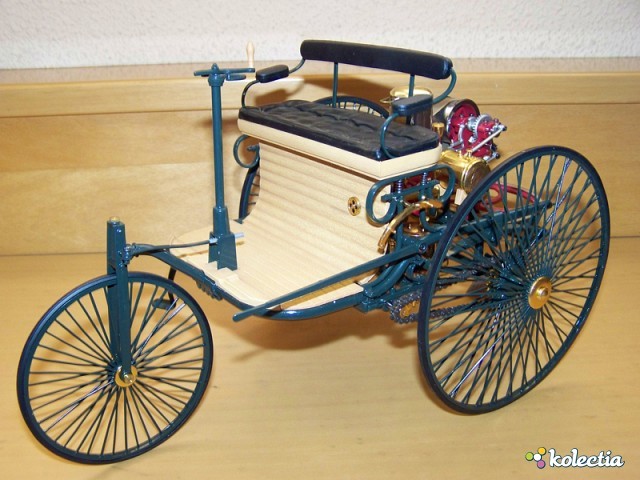
Jun 13, 1883 | The Partnership and Benz & Cie | Benz's lifelong hobby brought him to a bicycle repair shop in Mannheim owned by Max Rose and Friedrich Wilhelm Eßlinger. In 1883, the three founded a new company producing industrial machines: Benz & Company Rheinische Gasmotoren-Fabrik, usually referred to as, Benz & Cie. Quickly growing to twenty-five employees, it soon began to produce static gas engines as well. The success of the company gave Benz the opportunity to indulge in his old passion of designing a horseless carriage: Motorwagen |
 |
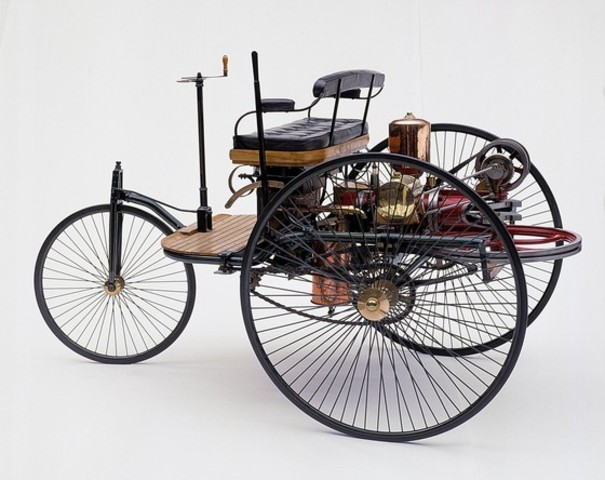
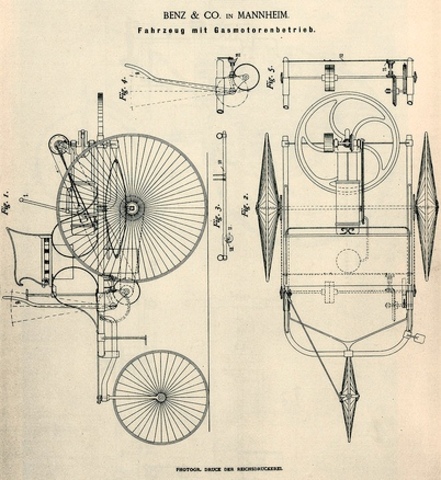
Jan 29, 1886 | Motor Wagen is Patented | The Motorwagen was patented as an "automobile fueled by gas". The version was difficult to control, leading to a collision with a wall during a public demonstration. |
 |
Jun 13, 1887 | The Final Model of The Motorwagen. First Vehicle on Earth. | After years of testing and modifications, Benz created the first definitive commercial vehicle, the Model 3, an automobile with a four-stroke engine of his own design between the rear wheels. It was gasoline powered, the power being transmitted by means of two roller chains to the rear axle with wooden wheels. This became the first production automobile in history of humanity. |
 |
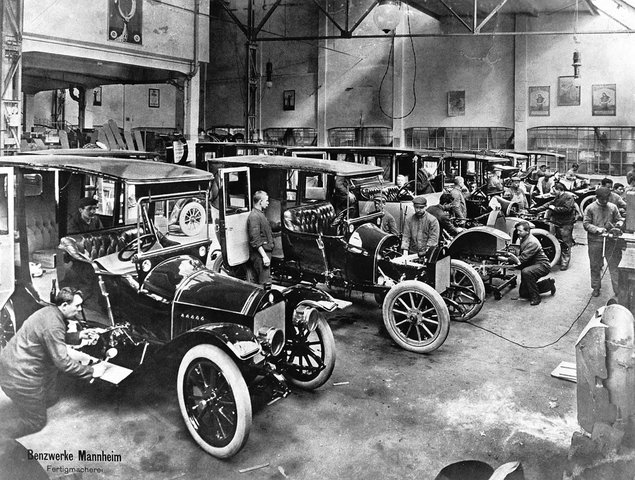
Jun 13, 1889 | The MotorWagen is introduced to the planet. | The model 3 was introduced at the World’s Fair in Paris with the result that it was rapidly promoted on a wider international scale. |
 |
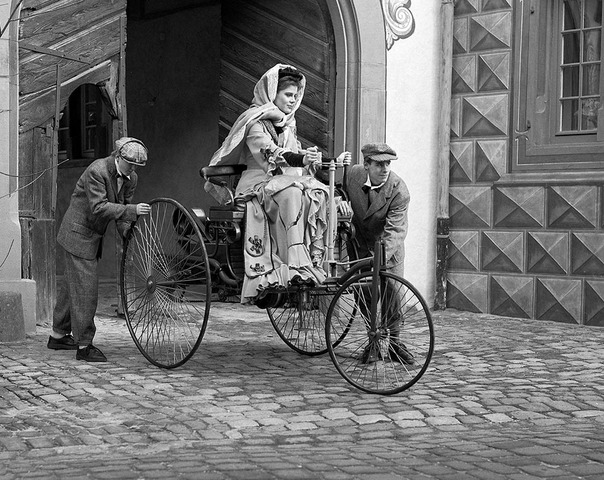
Jun 13, 1896 | Expansion | In 1896, Carl Benz was granted a patent for his design of the first boxer engine with horizontally opposed pistons. His design created an engine in which pistons balanced due to momentum. Flat engines with four or fewer cylinders are most commonly boxer engines. This continues to be the design principle for high performance racing car engines such as those used by Porsche. The great demand for internal combustion made the company bigger and bigger. |
 |
Jun 13, 1899 | Biggest Automobile Company in The World | By 1899 it had become the largest of its kind in the world, increasing employment from 50 (1890) to 430 (1899) workers and producing 572 automobiles per year. |
 |
Jun 13, 1900 | Competition | A new car company was built, Daimler Motors (DMG). Although smaller, eventually the competition with Daimler Motors (DMG) in Stuttgart began to challenge the leadership of Benz & Cie. in Mannheim. |
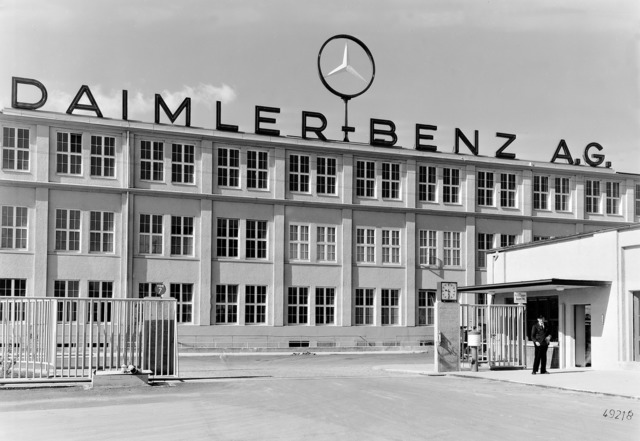 |
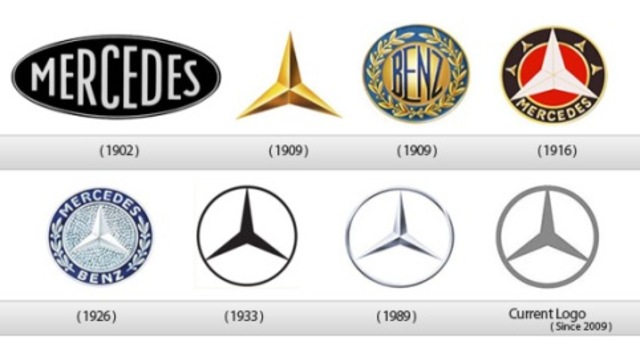
Jun 13, 1926 | World War and An Unexpected Alliance | After World War I, the years of depression led to an economic crisis and it became desirable for both companies to pool their resources. In that year, Benz & Cie. and the Daimler-Motor-Company merged to become the Daimler-Benz company, later to be renamed as Daimler-Benz. After the merger in 1926, all new automobiles were called Mercedes-Benz in honor of the most important model of the DMG automobiles, the Mercedes 35hp. |
 |
Jun 13, 1927 | Sucess | The number of units sold tripled to 7,918 and the diesel line was launched for truck production. |
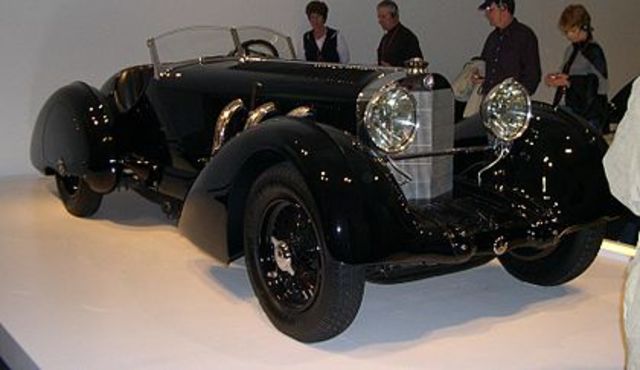 |
Jun 13, 1928 | First Mercedes-Benz Car | It was called the Mercedes Benz SSK |
 |
Apr 4, 1929 | Death | On April 4, 1929, Karl Benz died at home in Ladenburg at the age of eighty-four from a bronchial inflammation. Until her death on May 5, 1944, Bertha Benz continued to reside in their last home. Members of the family resided in the home for thirty more years. |